A sales intelligence platform can be a powerful tool, filling your sales pipeline with relevant, qualified contacts. However, when implemented incorrectly, these platforms can strain your budget, identifying prospects who exist only on paper and burning through AI credits with useless operations.
Through preparation and careful comparison, you can find a sales intelligence tool to suit your needs. Let’s look at the best features of a sales intelligence platform.
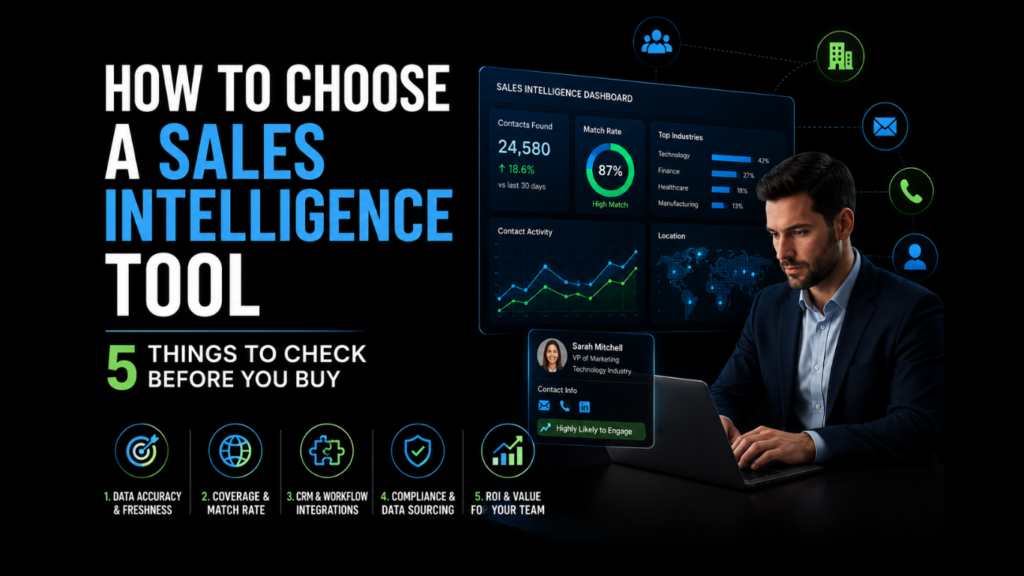
1: Data Accuracy and Freshness
In this roundup of sales intelligence software, first, we’re going to look at the importance of data. A sales intelligence tool is only as good as the data. Data assets, things like contact records, need to be kept up to date in a logical and consistent filing system.
Professionals change roles often, as illustrated in government figures from 2024, which state that the median time a US worker spent with their current employer was just 3.9 years. People switch roles often, and when your sales intelligence tools are not up to date with the latest information, they’ll throw out questionable leads. When communicating with software vendors, ask how often they re-verify records and where the underlying data comes from.
For accounts you already know, pull an example export and compare the direct dials and titles to the real ones. If the data is reliable, the tool has a genuine chance of fulfilling its potential.
2: Coverage and Match Rate
A tool with flawless data accuracy isn’t particularly impressive if it doesn’t get results in your target market. For example, let’s say you’re looking for European mid-market or public sector accounts in the tech industry. Many tools focus on the American tech sphere, and for companies looking for customers outside the US, such tools wouldn’t do much good.
Test the coverage of a sales intelligence system against your ideal customer profile. Rather than trusting the vendor-supplied sample, you should upload a list of target accounts and look at the match rate. The match rate you see represents the share of the accounts that the tool can enrich through providing usable contacts.
3: CRM and Workflow Integrations
Sales intelligence delivers value only when it reaches reps inside the tools they use in day-to-day work. Native syncing with your CRM means records stay effortlessly current, and it’s a seamless process to move from research to outreach. You should confirm that sales intelligence tools will properly integrate with your CRM fields and respect your data labelling practices.
A tool with flawed interconnectivity that creates duplicate entries or overrides good data can cause more problems than it can solve. Ask whether the sync runs in real time or in scheduled batches, and how the tool handles field mapping into your existing setup. A connector that needs constant attention will cost your team more hours than the platform ever saves.
4:Compliance and Data Sourcing
These platforms process personal data, so where they source that data from is key in the compliance process. Companies working in European markets are subject to GDPR laws. Using reliable GDPR software can also help businesses manage personal data responsibly and support their compliance processes. When you buy and use a sales intelligence list, you’re responsible for your own lawful basis in the markets you operate in.
In some cases, the data might be acceptable to use in the United States but unacceptable to use in the European Union. Ask each vendor to document where their records come from and how the people in them were told their data is held. Make sure you have a clear understanding of which compliance laws apply to your sales intelligence data.
Read More: AI Music Generators: How Creators Can Make Royalty-Free Tracks
Digital Sales Intelligence Platforms: Making Your Choice
Choosing the right sales intelligence platform comes down to knowing the tools before you commit. Test the data against accounts you’re familiar with, and check that coverage lines up with the markets you actually sell into. You should also confirm the tool syncs cleanly with your CRM, and make sure its data sourcing keeps you on the right side of the compliance rules where you operate.
No platform is perfect, so weigh each option against what your team needs most. If you’re interested in learning more about similar topics, see our article archive for more.