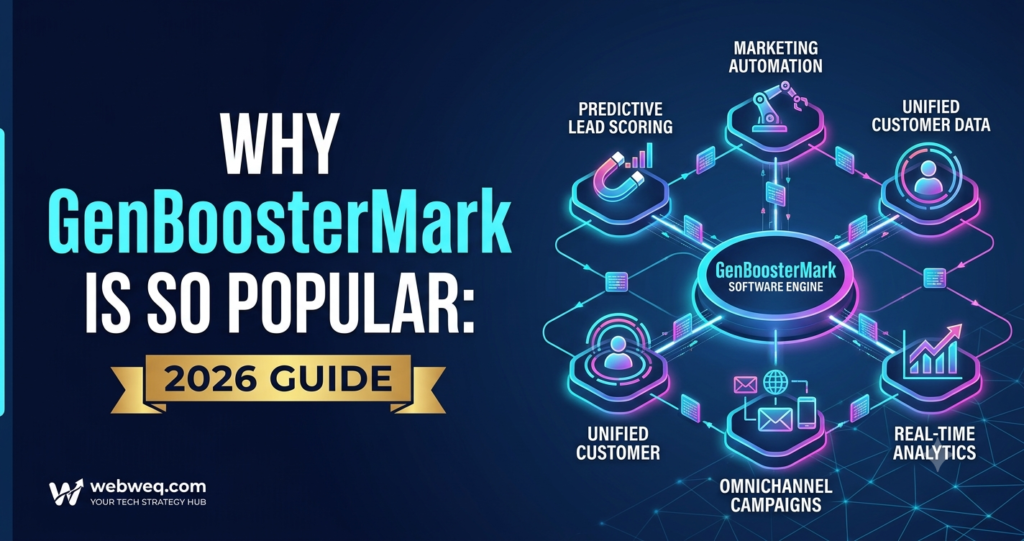
GenBoosterMark software is popular because it bridges the gap between predictive modeling and marketing automation, helping teams reduce manual operational overhead. By unifying fragmented tech stacks into a single workflow engine, it allows growth and revenue teams to execute multi-channel campaigns without accumulating technical debt.
As the B2B tech sector matures, mid-market and enterprise organizations are consolidating their stacks. Legacy tools that rely on fragmented add-ons and third-party connections are being replaced. GenBoosterMark has surfaced as a prominent software platform because it addresses the foundational friction points modern revenue teams face: high data latency, disjointed customer profiles, and labor-intensive campaign management.
The Core Driver Behind GenBoosterMark’s Rapid Adoption
Modern organizations routinely struggle with disconnected data silos. Standard platform architectures require complex API bridges to connect customer relationship management (CRM) systems with downstream execution tools, resulting in tracking delays, lost attribution signals, and high monthly subscription overhead. To optimize these connections, establishing a reliable data pipeline integration strategy is critical for maintaining cross-platform integrity.
GenBoosterMark addresses this architecture bottleneck at the core data layer. By operating on a single, unified database engine, the software processes user interactions across web, email, product usage touchpoints, and mobile endpoints in real time without relying heavily on middleware connectors.
[ Unified Data Layer ] ──> [ Contextual AI Engine ] ──> [ Automated Omnichannel Execution ]Key Architectural Advantages
- Native Predictive Lead Scoring: Evaluates real-time intent signals, product usage frequency, and behavioral changes rather than relying on static, point-based lead scoring models.
- Real-Time Event Triggers: Fires automated outbound workflows instantly upon behavioral milestone completion, maximizing conversion potential during peak buyer intent.
- Full-Funnel Attribution Modeling: Tracks customer conversion paths across linear and non-linear user journeys natively, eliminating attribution gaps between sales and marketing teams.
- Reduced Tech Stack Friction: Replaces multiple single-purpose point tools with one centralized engine, significantly lowering licensing costs and administrative overhead.
Key Features Driving GenBoosterMark Software Adoption
Evaluating modern growth platforms requires assessing how well they handle scale, integration complexity, and workflow execution. When compared to other modern growth stack automation tools, GenBoosterMark sets itself apart from traditional campaign execution tools by focusing on execution speed, dynamic personalization, and system reliability.
| Core Feature Area | Traditional Growth Platforms | GenBoosterMark Software Platform | Operational Impact |
|---|---|---|---|
| Workflow Engine | Rules-based, static branching logic | Context-aware, dynamic algorithmic paths | Noticeable reduction in campaign workflow build time |
| Data Processing | Batch updates with 15-60 minute latency | Real-time event streaming and ingestion | Immediate trigger accuracy across all touchpoints |
| AI Personalization | Basic token insertion (e.g., {{first_name}}) |
Dynamic, real-time context and content generation | Higher engagement across target cohorts |
| Stack Integration | Requires third-party middleware | Native, bi-directional API webhooks | Reduced technical debt and lower ongoing upkeep |
| Reporting & Insights | Delayed end-of-day analytics dashboards | In-app real-time pipeline and attribution metrics | Faster decision-making for growth strategists |
How GenBoosterMark Optimizes Technical Workflows
Transitioning to advanced orchestration software requires a structured rollout to maintain data hygiene, safeguard privacy standards, and preserve active tracking pipelines. Teams implementing GenBoosterMark typically follow a streamlined four-phase operational deployment strategy:
Phase 1: Architecture Audit ──> Phase 2: Schema Mapping ──> Phase 3: Dynamic Trigger Rollout ──> Phase 4: AI Optimization- Audit Existing Pipeline Schema: Map current custom properties, event names, and user attributes before initiating data ingestion into the platform. Clean out legacy duplicates to ensure a smooth database migration.
- Establish Bi-Directional Webhooks: Connect core customer databases directly to GenBoosterMark using authenticated RESTful API standards. This guarantees instant two-way synchronization between your backend infrastructure and user-facing communications.
- Configure Predictive Cohorts: Define behavioral triggers based on algorithmic conversion velocity rather than arbitrary engagement metrics. Group users dynamically according to their intent signals and lifecycle stage.
- Deploy Iterative Testing Modules: Utilize built-in testing tools to optimize messaging variables over time, automatically routing traffic to higher-performing messaging variations without manual intervention.
Enterprise Reliability, Security, and Scalability
As software adoption scales across mid-market and enterprise tiers, administrative compliance and data security become essential prerequisites. GenBoosterMark addresses these requirements through core infrastructure standards built for high-concurrency workloads:
- Granular Role-Based Access Control (RBAC): Restricts campaign execution, administrative rights, and customer data visibility based on strict team-level permissions.
- Industry-Standard Data Encryption: Protects sensitive data through modern encryption protocols both in transit and at rest.
- High-Throughput Webhook Processing: Engineered to handle sudden event spikes during high-volume product launches without message queuing delays, packet loss, or rate-limiting failures.
- Global Data Privacy Compliance: Supports regional data management settings to help enterprises remain aligned with privacy regulations such as GDPR compliance regulations and CCPA.
The Strategic ROI of Upgrading Your Platform Stack
Ultimately, software is judged by its impact on bottom-line revenue and operational efficiency. Organizations making the transition to GenBoosterMark report measurable productivity gains across engineering, marketing operations, and revenue teams.
By automating routine data hygiene tasks, eliminating manual list building, and streamlining content generation, growth teams can focus on strategic positioning rather than technical troubleshooting. The result is faster campaign deployment cycles, lower software acquisition costs, and higher end-to-end customer lifetime value.
Frequently Asked Questions
Is GenBoosterMark software easy to integrate with existing CRM platforms?
Yes. GenBoosterMark includes native, bi-directional integrations for major enterprise platforms as well as well-documented open REST APIs for custom database syncing.
What makes GenBoosterMark different from traditional marketing automation software?
Unlike traditional tools that rely on static, linear decision trees and delayed batch data syncs, GenBoosterMark utilizes real-time event streaming combined with adaptive algorithms to dynamically branch user journeys based on immediate behavioral intent.
Does GenBoosterMark require dedicated engineering support to manage?
While initial setup and custom API mapping benefit from developer involvement, the day-to-day visual campaign builder and workflow logic manager are explicitly designed for non-technical growth specialists and operations teams.