People tend to picture truck crashes as split-second events. A driver drifts into another lane, someone brakes too late, or a tire blows. While those things can and unfortunately do happen, what usually decides the legal case happens long after the tow trucks leave.
What do we mean by this? Modern commercial trucks generate mountains of data. Every mile, every stop, every engine fault, every inspection, leaves some kind of record. It doesn’t mean that trucking companies have suddenly become transparent; plenty still fight claims aggressively. But it’s a lot harder to say, “We don’t know what happened,” when the truck has been documenting the trip.
There are now electronic logs, GPS histories, maintenance software, dashcams, engine modules, dispatch messages, and inspection databases at your disposal. None of them tells the whole story alone, of course. But when you put them together, they often expose decisions that started hours (or even weeks) before the collision.
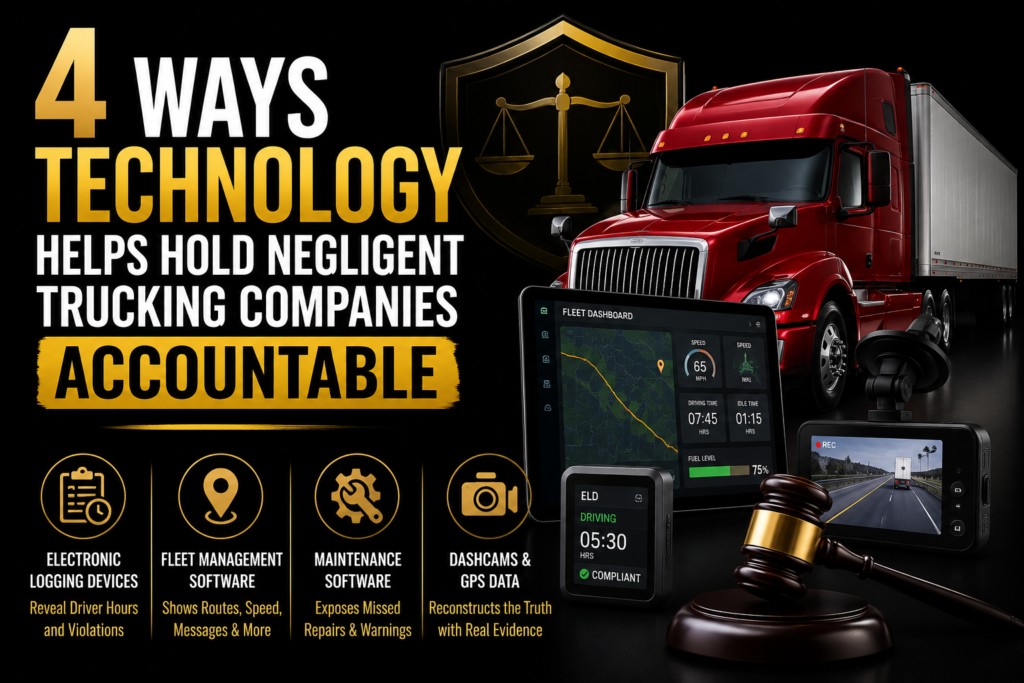
Electronic Logging Devices Reveal More Than Driver Hours
Truck drivers used paper logbooks for decades. They weren’t useless, but they were easy to manipulate. Electronic Logging Devices (ELDs) are much harder to manipulate.
They connect directly to the truck and automatically record driving time, engine hours, mileage, and duty status, making it much more difficult to hide hours-of-service violations. The Federal Motor Carrier Safety Administration requires them for most interstate commercial carriers for exactly that reason.
Why does that matter after a crash? Well, fatigue, for example, doesn’t leave skid marks. But an electronic log showing someone drove beyond the legal limit or skipped required rest periods? That’s different. It can raise uncomfortable questions about whether the driver ignored the rules, or whether the company secretly expected them to.
Fleet Management Software Shows the Bigger Picture
People hear “GPS” and think location. But fleet management systems go way beyond that now.
Many record speeding events, harsh braking, idle time, routes, driver messages, engine warnings, fuel stops, and delivery schedules. Instead of looking at five seconds before impact, investigators can reconstruct an entire workday. In other words, they provide a wider picture that can be surprisingly revealing.
For instance, imagine a driver who’s still outside Wichita, Kansas, but dispatch keeps asking whether they’ll make it to Oklahoma City before the end of the evening despite storms, traffic delays, or the fact they’ve already been behind the wheel for hours. A message like that doesn’t automatically prove anyone broke the law. But paired with ELD records showing the driver exceeded legal hours or sped to stay on schedule, it starts painting a much clearer picture of how the crash happened.
Maintenance Software Sometimes Tells an Even Better Story
Mechanical failures occasionally strike out of nowhere, but that’s the exception rather than the rule. For example, brakes usually don’t fail without warning, and tires rarely become dangerous overnight. Commercial fleets generate maintenance records constantly because every repair, inspection, and diagnostic check gets logged somewhere.
Those records can answer questions nobody at the crash scene can:
- Was that brake issue reported three weeks earlier?
- Did mechanics recommend replacing worn tires that stayed on the truck anyway?
- Did the same vehicle fail inspections more than once?
Sometimes the paperwork ends up being more damaging than the accident photos.
Dashcams and GPS Data Help Reconstruct What Actually Happened
Dashcams have changed trucking litigation dramatically. A video might show a truck drifting across lanes or another driver cutting the truck off. Sometimes it clears the truck driver completely. That’s worth mentioning because technology isn’t automatically on one side.
But dashcam footage gets much stronger when it lines up with everything else. GPS confirms speed, the ELD confirms driving hours, engine data shows braking. And dispatch records explain where the driver was trying to get.
While each piece of data is useful individually, they are far more compelling together. They create a unified timeline that is difficult for insurers to dispute.
Time Works Against You After a Truck Crash
Here’s something many people don’t realize until it’s too late: not every digital record lasts forever. Some onboard systems overwrite data automatically, camera footage may be deleted, and internal communications can disappear under normal retention policies unless someone formally demands that evidence be preserved. That’s why attorneys move fast after serious commercial truck crashes.
Remember the Wichita-to-Oklahoma City example? Suppose the driver, trying to make that delivery window, crashes into your vehicle on I-40 near Oklahoma City. The trucking company would likely begin gathering evidence almost immediately. If you wait too long, some of that evidence may be overwritten, deleted under routine retention policies, or become much harder to obtain.
That’s why people pursuing Oklahoma semi-truck injury claims often benefit from speaking with a truck accident lawyer as soon as possible. Your attorney can send preservation letters that require the trucking company to retain key electronic records, subpoena additional documents when necessary, and analyze the digital evidence before it disappears. Just as importantly, they can push back while the trucking company and its insurer work to limit their own liability, helping you pursue the compensation you deserve.
Technology Creates Accountability But People Still Build the Case
A truck can generate gigabytes of information every week. Still, a human has to make sense of it.
Lawyers compare electronic logs against dispatch records. Accident reconstruction experts line GPS data up with crash damage. Engineers examine maintenance histories alongside inspection reports.
Sometimes one missing brake repair explains everything. Other times it’s dozens of small decisions that only become obvious once the records sit side by side.
That’s probably the biggest change technology has brought to trucking litigation. Companies still deny responsibility, and drivers still make mistakes. But the days when a trucking company could shrug its shoulders and claim nobody knows what happened? Those are getting shorter every year.