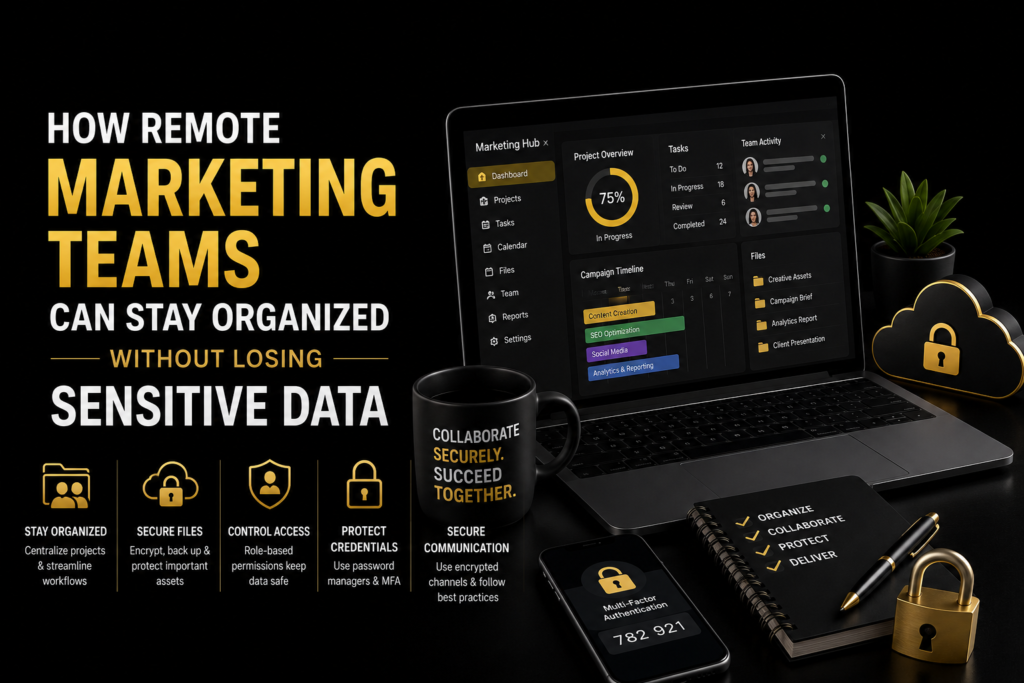
Remote work has transformed the way marketing teams operate. Content creators collaborate with SEO specialists across different time zones, designers share assets with clients worldwide, and campaign managers coordinate launches without ever meeting in the same office. This flexibility has improved productivity and expanded access to global talent, but it has also introduced new challenges—particularly when it comes to keeping projects organized while protecting sensitive information.
Marketing departments routinely handle confidential client data, advertising budgets, campaign strategies, login credentials, and unpublished creative assets. Without clear systems and security practices, remote collaboration can quickly become disorganized and expose valuable information to unnecessary risks.
Why Organization Matters in Remote Marketing
Marketing projects often involve multiple moving parts. A single campaign may require contributions from copywriters, graphic designers, SEO experts, developers, social media managers, and account managers. When everyone works remotely, files and communication can easily become scattered across email threads, messaging apps, and cloud storage platforms.
An organized workflow helps teams:
- Track project progress more efficiently.
- Reduce duplicate work.
- Improve communication.
- Meet deadlines consistently.
- Deliver a better client experience.
More importantly, structured collaboration minimizes the chance of confidential information ending up in the wrong hands.
Centralize Your Project Management
One of the biggest mistakes remote teams make is relying on multiple disconnected tools for managing tasks. Instead of juggling spreadsheets, emails, and personal notes, successful marketing teams centralize projects in a single management platform.
A well-organized system should clearly define:
- Project deadlines
- Team responsibilities
- Approval stages
- Content calendars
- Campaign milestones
- Client feedback
When every team member knows where to find the latest information, confusion decreases and productivity improves.
Secure Your Files with Reliable Cloud Storage
Remote marketing teams create and exchange thousands of files, from campaign briefs and creative assets to analytics reports and client presentations. Choosing secure cloud storage is essential for keeping these files organized while ensuring sensitive information remains protected. Look for solutions that offer end-to-end encryption, version history, granular access controls, and automatic backups.
Control Access to Sensitive Information
Not every employee or freelancer needs access to every client file. Following the principle of least privilege means giving team members access only to the information required for their role.
For example:
- Copywriters may only need content briefs.
- Designers require creative assets.
- Account managers need client communication.
- Finance staff access invoices and budgets.
Restricting permissions significantly reduces the risk of accidental data exposure.
Protect Client Credentials
Marketing professionals frequently work with sensitive login information, including:
- Google Ads accounts
- Analytics platforms
- CRM systems
- Email marketing software
- Social media profiles
- Website hosting accounts
Storing passwords in spreadsheets or messaging apps creates unnecessary security risks.
Instead, teams should use dedicated password management solutions that securely encrypt credentials while allowing controlled access for authorized users. Multi-factor authentication (MFA) should also be enabled whenever available to add an additional layer of protection.
Establish Clear File Naming Conventions
Simple organizational habits can save countless hours.
Instead of files named:
- Final.pdf
- Final_v2.pdf
- Really_Final.pdf
Use consistent naming conventions such as:
ClientName_CampaignName_Version_Date
For example:
Acme_SummerCampaign_V3_2026-07-13.pdf
Consistent file structures make documents easier to locate while preventing confusion over outdated versions.
Keep Communication Secure
Remote teams often exchange campaign ideas, budgets, and confidential documents through instant messaging platforms.
While convenience matters, security should never be overlooked.
Teams should:
- Avoid sending passwords through chat.
- Use encrypted communication channels.
- Verify recipient addresses before sharing files.
- Remove former employees from collaboration platforms immediately.
- Archive completed projects securely.
Clear communication policies help reduce human error, which remains one of the leading causes of data breaches.
Train Employees on Security Best Practices
Technology alone cannot prevent every security incident.
Regular employee training helps remote workers recognize:
- Phishing emails
- Fake login pages
- Social engineering attacks
- Suspicious file attachments
- Unsafe public Wi-Fi connections
Creating a security-conscious culture ensures everyone shares responsibility for protecting client information.
Back Up Critical Marketing Assets
Marketing campaigns often represent months of planning and creative work.
Losing campaign files because of accidental deletion, ransomware, or hardware failure can be costly.
Organizations should maintain automatic backups of:
- Creative assets
- Website content
- Client documents
- Analytics reports
- Campaign performance data
Multiple backup locations—including secure cloud storage and offline copies—provide additional protection against unexpected events.
Balance Collaboration with Privacy
Modern marketing depends on collaboration, but unrestricted access is rarely necessary. Teams should regularly review user permissions, remove inactive accounts, and audit shared folders to ensure confidential information remains protected.
This approach allows employees to collaborate efficiently without compromising client trust or regulatory compliance.
Read More: How Better CRM Data Leads to Better AI Outcomes
Building a Secure Remote Marketing Workflow
Remote marketing teams can remain highly productive without sacrificing security. Success comes from combining effective organization with thoughtful data protection practices. Centralized project management, role-based permissions, secure password management, consistent documentation, and ongoing employee training all contribute to a safer and more efficient working environment.
As remote work continues to shape the marketing industry, businesses that prioritize both collaboration and data security will be better positioned to build lasting client relationships while protecting the valuable information that drives every successful campaign.