Email is really important for businesses to communicate with each other. It is also a way for bad people to get into your system and cause trouble. They can use emails and other tricks to steal your information. This can hurt your business. Cost you money.
Businesses use things like Sender Policy Framework and DomainKeys Identified Mail to keep their emails safe. They also use Domain-based Message Authentication, Reporting & Conformance. These tools are very good at keeping emails.. Using them can be hard to manage. That is where tools that check and analyze Domain-based Message Authentication, Reporting & Conformance come in. They make it easier to use these tools.
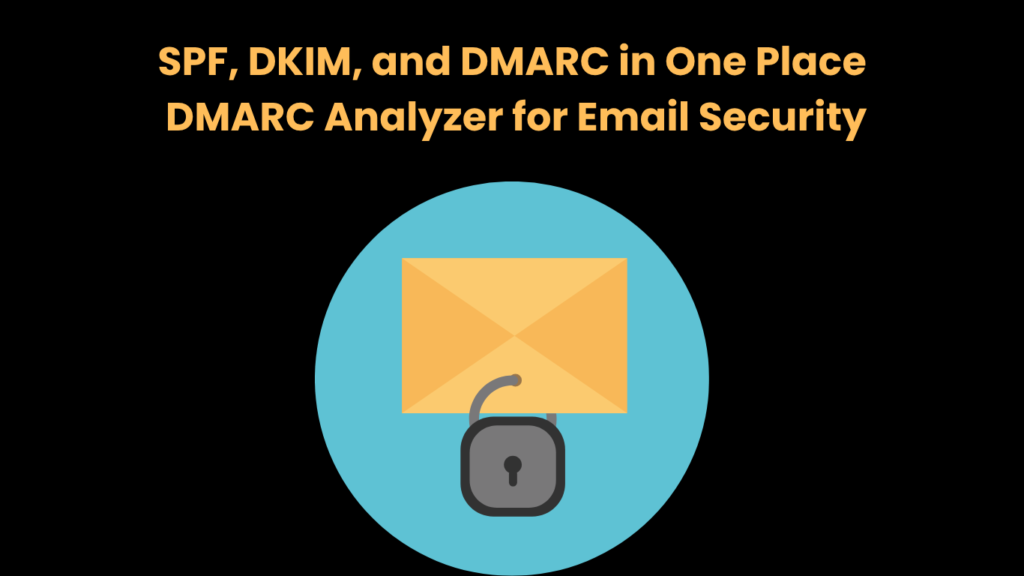
This article is about how we can make email security by using SPF, DKIM and DMARC together. When we combine SPF, DKIM and DMARC into one platform it helps to make email security stronger. At the time it makes things easier to manage which is a big plus. Using SPF, DKIM and DMARC together is a way to keep email security strong and simple.
The Role of SPF, DKIM, and DMARC in Email Authentication
Emails can be verified to make sure they are real and come from people we trust thanks to SPF, DKIM and DMARC working together.
SPF is useful because it lets the people who own a domain say which computers are allowed to send emails using their domain. This helps stop people from pretending to be the domain.
DKIM is like a signature that gets added to each email. The server that gets the email can check this signature to make sure the email has not been changed while it was being sent and that it really does come from the person who says they sent it.
DMARC uses both SPF and DKIM to let the people who own a domain decide what to do with emails that do not pass the authentication checks. DMARC also helps organizations keep an eye on how the authentication is working and deal with any potential problems. Managing SPF, DKIM and DMARC is not easy. Requires a lot of work and knowledge which is why DMARC analyzers are very helpful for SPF, DKIM and DMARC.
Why Comprehensive DMARC Checker Tools Are Essential
While the technical aspects of SPF, DKIM and DMARC can be daunting to those who have complicated email infrastructures or limited IT support staffs, the consequences of simply misconfiguring these systems are that some legitimate emails will be blocked and many types of spoofing attacks could potentially bypass the company’s defense system. It is at this point that using a DMARC check tool would be useful as they automate the checking of DNS records; analysis of an organization’s policies, along with identifying any potential areas of weakness within their current configuration. In addition, by combining the evaluation of an organization’s SPF, DKIM and DMARC into one interface (dashboard), the DMARC analyzer provides security administrators with an efficient means to evaluate both the configuration errors in an organization’s policies, any gaps in the policies themselves and any problems associated with the delivery of the emails. Moreover, the best DMARC checker tools offer actionable insights and educational resources to guide administrators through remediation steps, making email security accessible to organizations of all sizes.
Key Features to Look for in a DMARC Analyzer
When you are choosing a DMARC analyzer there are a things that you need to think about.
First, you need to be able to see what is happening in time. If someone makes a change to the DNS records you should be able to see that change away. This way the people in charge can see how the changes affect things without having to wait.
The next thing is that you need to have reports and be able to look at old data. This is helpful for seeing what is going on over time making sure you are doing what you are supposed to be doing and getting ready for audits.
Another thing that is really important is getting help to fix problems. The best tools do not just tell you what is wrong they also tell you how to make it right. This might mean updating the SPF records making the DKIM keys stronger or changing the DMARC policies so that you have a balance between security and being able to get emails delivered.
Finally you need to be able to use the tool even if your organization’s big and has a lot of domains or email service providers. You need a tool that can work with all of these things and let you manage them from one place. This makes it a lot easier to use a DMARC analyzer.
Real-World Impact: Examples and Data
Strong email authentication has benefits. A 2023 Verizon report shows that phishing attacks make up than a third of all data breaches. Business Email Compromise still causes financial losses all over the world. Organizations that monitor SPF, DKIM and DMARC with tools can greatly reduce these risks.
For example, a large bank reduced phishing attempts by 90% after using a DMARC analyzer tool. It got a view of fake email activity and quickly changed its policies. This helped protect its customers and also its brand reputation. The bank kept an eye on email authentication and that really paid off. Email authentication is really important for all businesses. They should all use SPF, DKIM and DMARC to stay safe.
Common Challenges in Implementing Email Authentication
Many organizations have a time setting up and keeping email authentication systems working properly. This is because they have complicated email systems and they have to work with a lot of companies. Sometimes the DNS settings are not correct. That can cause problems. The thing is organizations have to balance being very strict about security and making sure real emails get through to the people who need them. Email authentication systems are important. Many organizations struggle with these systems.
DMARC checker tools can assist in monitoring authentication results, identifying vulnerabilities, and ensuring that policies are correctly implemented.
These tools are really helpful because they find problems like when the settings for SPF or DKIM do not match the domain that is sending the email. A lot of platforms let companies try out rules in a safe place before they put them in place everywhere so they do not cause any unexpected issues, with the SPF or DKIM configurations and the sending domain.
Improving Security Posture with Continuous Monitoring
Email security is something that you have to keep an eye on all the time. It is not something that you can just set up and then forget about.
As companies update their systems or add vendors or change the way they do marketing they have to make sure their email settings are updated too. At the time people who try to hack into emails are always coming up with new ways to do it.
There are tools called DMARC analyzers that can help with this. These tools can send you alerts. Check your emails regularly and keep an eye on things in real time.
Some of these tools can even work with systems that are already in place which means that if something goes wrong, the people, in charge can respond faster and see what is going on with the companys emails and computers.
The Future of Email Security: Integration and Automation
The future of email security is about making things work together and automating tasks. Email security is getting better with tools that use machine learning to find patterns and flag potential threats before they become big problems. These tools are now working with security systems like SIEM systems to give us a better view of what is happening and help us respond quickly to threats.
The Email Security tools are also providing resources to teach people about complex email security concepts in a simple way, which is really helpful, for people who are not tech experts to understand and manage their Email Security. Email Security is becoming easier to manage with these tools and resources.
Practical Steps for Getting Started
Companies that want to make their email security better should start by looking at their SPF, DKIM and DMARC settings. There are a lot of paid tools that can help with this including some that are already part of integrated DMARC solutions. These tools can tell companies if their emails are real or not and show them where they need to improve. Then companies can make their DNS records better use cryptographic keys and make their DMARC policies more effective.
It is usually an idea to start with a DMARC policy that is set to “none”. This lets companies watch what is going on with their emails without stopping any of them from being delivered. Once companies are sure that their DMARC settings are correct they can make their policies stricter. They can change them to “quarantine” or “reject” to stop emails from getting through. Companies should use DMARC to make their email security better. DMARC helps companies keep their emails safe by using SPF and DKIM.
Read More: Why AI Video Is Becoming Essential For Performance Marketing Funnels
Conclusion: Building a Resilient Email Security Framework
In today’s changing threat environment, it is very important to make sure you have strong email validation to protect your organization’s communication. The use of SPF, DKIM and DMARC will greatly improve the chances of your organization from being subject to phishing attacks, or other types of spoofed emails. A DMARC analyzer tool will provide additional insight into how well the DMARC policy is performing; this provides an easier way to manage your DMARC policy and support future compliance with industry standards.
As long as you are continuously checking the status of your DMARC implementation, configuring your DMARC policy properly and using the correct tools for analyzing your DMARC performance, you will be able to create an email protection structure that will allow you to maintain your company’s reputation and promote confidence in all electronic correspondence.