Operational efficiency in financial services depends on order, timing, and accurate records. Small delays at intake can echo through reviews, servicing, and closure. Teams then spend valuable hours correcting files, chasing approvals, or answering preventable queries. A well-run lifecycle process reduces that friction. It gives staff a clear sequence for each task, supports cleaner documentation, and helps institutions maintain steady performance as client volumes rise.
1. Faster Onboarding
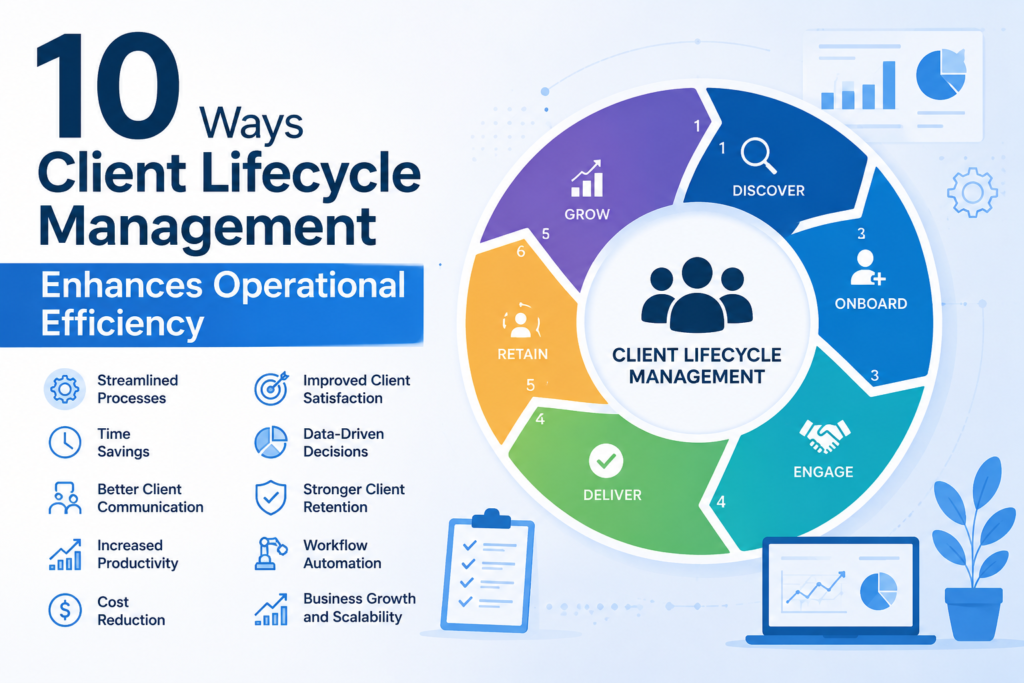
First impressions in financial operations are often shaped by onboarding speed. Effective client lifecycle management brings intake, identity checks, document review, and approval steps into one controlled path. That structure limits duplicate entry, shortens waiting time, and makes missing items easier to spot early. Staff can move cases forward with greater confidence, while clients face fewer interruptions during a sensitive opening stage.
2. Fewer Manual Tasks
Routine actions drain operational capacity more than many firms expect. Rekeying names, forwarding forms, or checking the same field twice adds minutes to every file. Across a large book, those minutes become lost days. Automated task routing and rule-based checks reduce that burden. Teams then reserve attention for exceptions, judgment calls, and higher-risk situations where careful human review matters most.
3. Reusable Client Data
Repeated data requests weaken trust and slow service. Clients rarely understand why one department asks for details that another team already holds. A shared record solves much of that strain. Core information can be collected once, then applied across account setup, servicing, and review activity. Consistent records also reduce the chance of conflicting entries, which often trigger avoidable follow-up and correction work.
4. Better Workflow Visibility
Operations leaders need a clear view of each case, not a patchwork of email trails and spreadsheet notes. Visibility improves when task status, ownership, and pending actions sit in one place. Managers can identify stalled files sooner and rebalance workloads before backlogs spread. That kind of oversight supports steadier service, especially during peak periods, internal reviews, or heavy document intake cycles.
5. Stronger Compliance Control
Compliance work suffers when evidence is scattered across folders, inboxes, and separate systems. A unified process supports scheduled checks, documented approvals, and more consistent screening activity. That record matters during audits, where missing proof can create long delays and extra pressure. Clear control points help staff apply policy with greater consistency, while oversight teams spend less time reconstructing the history behind a decision.
6. Lower Error Rates
Many operational failures begin with ordinary data defects, such as a transposed date, an incomplete address, or an outdated ownership detail. Those mistakes can later affect screening, approval timing, and review quality. Standardized forms reduce variation at the point of entry. Validation rules catch omissions before a file moves ahead. Cleaner records mean fewer downstream corrections, fewer rejected cases, and less friction across connected teams.
7. Quicker Client Reviews
Periodic reviews become difficult when staff must rebuild the file each time. A complete lifecycle record keeps prior documents, earlier decisions, and change history readily available. Reviewers can focus on what has shifted since the last assessment instead of repeating basic collection work. That saves time, improves continuity, and helps institutions direct skilled attention toward accounts with meaningful risk or material change.
8. Improved Cross-Team Coordination
Client servicing rarely sits with one function alone. Operations, compliance, legal, relationship teams, and product staff often touch the same case at different moments. Without a shared process, work can drift out of sequence. Coordinated workflows clarify ownership and timing for every step. That reduces internal confusion, limits repeated outreach, and helps each group understand how its actions affect the broader service experience.
9. Lower Operating Costs
Efficiency gains have financial value because they reduce wasted effort without weakening control. Faster onboarding, shorter reviews, and fewer correction cycles all trim labor hours per case. Savings also appear when experienced staff spend less time on clerical tasks and more time on higher-value judgment work. Over a full operating year, that shift can improve planning, staffing balance, and capacity management.
10. Easier Growth at Scale
Growth often exposes weak processes before it shows up in revenue reports. As client numbers rise, even small inefficiencies can strain teams, delay approvals, and increase service complaints. A structured lifecycle model supports expansion by keeping intake, review, servicing, and closure steps consistent. Firms can handle greater volume with less disruption while preserving control standards and maintaining a steadier operational rhythm.
Read More: 5 Best Video Hosting Platforms with Expiring Links and Domain Restriction
Conclusion
Strong operations are built on consistency, traceable decisions, and reliable information flow. Speed helps, but pace alone does not protect quality. Client lifecycle management supports a more disciplined approach by connecting onboarding, review activity, servicing, and closure within one organized framework. That approach reduces unnecessary work, improves record integrity, and gives institutions a steadier base for handling rising demand, tighter oversight, and long-term operational pressure.