Most dev teams didn’t get into software to spend their best hours chasing CVEs or babysitting a SIEM dashboard. Security work is essential, but it’s also specialized enough that doing it well in-house often means doing something else poorly. The instinct to keep everything internal is understandable, but it usually comes from a good place rather than a strategic one.
Knowing what to hand off — and to whom — is one of the more underrated skills a growing engineering org can develop.
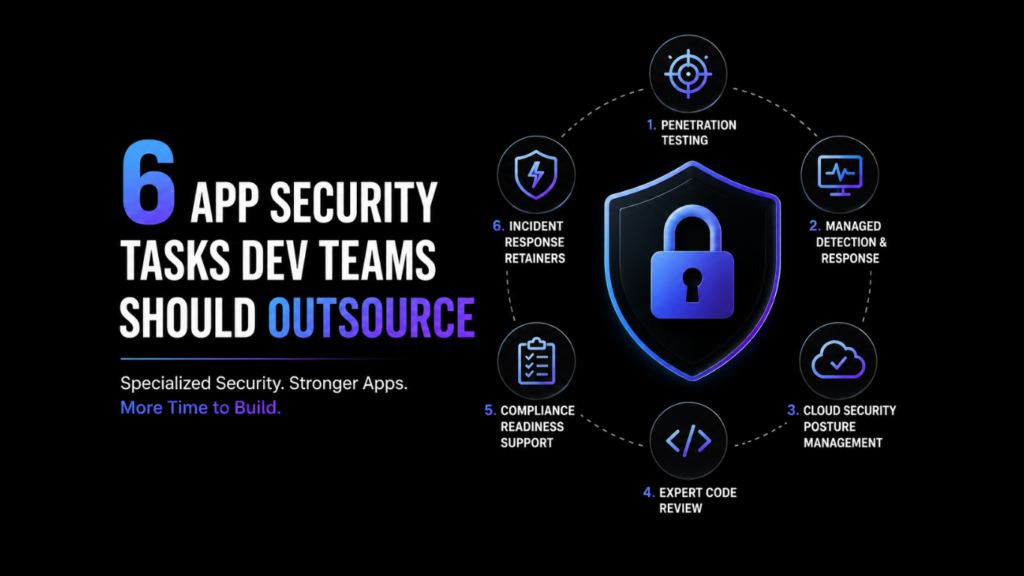
1. Penetration Testing for Major Releases
Pen testing requires an adversarial mindset that’s genuinely hard to maintain about your own code. Outside firms bring fresh eyes, current attack techniques, and no emotional investment in the architecture decisions that got made six sprints ago.
ROI note: a single missed vulnerability caught pre-launch is cheaper by orders of magnitude than the same vulnerability found in production. Vet vendors by checking their reporting clarity, not just their credentials — a report full of jargon and no actionable remediation steps isn’t worth much.
2. Managed Detection and Response
Round-the-clock monitoring is a staffing problem most teams can’t solve internally without significant headcount. MDR providers bring threat intelligence feeds, trained analysts, and response playbooks that would take years to build from scratch.
ROI note: the value here is speed. A threat caught at 3am by a managed team versus discovered at 9am by an internal team is the difference between containment and cleanup. Look for providers with transparent SLAs around detection and response times, not vague promises.
3. Cloud Security Posture Management
Cloud environments sprawl fast, and misconfigurations are one of the most common causes of breaches that have nothing to do with sophisticated attacks. CSPM specialists continuously audit configurations against best practices across AWS, Azure, or GCP in ways manual reviews simply can’t match at scale.
ROI note: this is largely about preventing the embarrassing, avoidable breach — an exposed S3 bucket or an overly permissive IAM role. Vet providers based on whether their tooling integrates cleanly with your existing stack rather than requiring a parallel system.
4. Expert Code Review for Security-Critical Components
Internal code review catches bugs. It doesn’t always catch subtle security flaws, especially in cryptographic implementations, authentication flows, or payment processing logic where small mistakes have outsized consequences. External security-focused reviewers specialize in exactly these blind spots.
ROI note: this is targeted, not comprehensive — the value comes from focusing expert eyes on the highest-risk components rather than reviewing everything externally. Look for reviewers with specific experience in your tech stack and the type of system you’re securing.
There’s a deeper outsourcing cybersecurity guide worth reading if you’re weighing the broader pros and cons of bringing in outside security help, along with a practical checklist for vetting providers before signing anything.
5. Compliance Readiness Support
SOC 2, HIPAA, PCI-DSS — compliance frameworks eat engineering time that could otherwise go toward product. Specialized compliance consultants know exactly what auditors look for and can streamline the process considerably compared to a team learning the framework from scratch.
ROI note: faster compliance certification often translates directly to closed deals, especially in enterprise sales cycles where prospects require proof before signing. Check whether a vendor has direct experience with your specific framework and industry, not just general compliance knowledge.
6. Incident Response Retainers
Having an incident response plan is good. Having a retainer with a firm that can mobilize within hours of a breach is considerably better. The middle of an active incident is the worst possible time to be searching for help and negotiating contracts.
ROI note: response time during an active breach directly correlates with damage scope and recovery cost. Vet retainer providers on their actual incident history and response time guarantees, not just their marketing materials.
Read More: Maximizing Digital Growth: Strategic Social Media Marketing for Modern Brands
Knowing What to Hand Off
Outsourcing security work isn’t a sign that an internal team isn’t capable — it’s a recognition that specialized threats deserve specialized expertise. The six tasks above represent the areas where outside help tends to deliver the clearest return, freeing internal teams to focus on building rather than constantly defending. The teams that get this balance right tend to ship faster and sleep better, which is really the whole point.
If you found this useful, explore more on building secure, scalable software systems across the rest of the site.