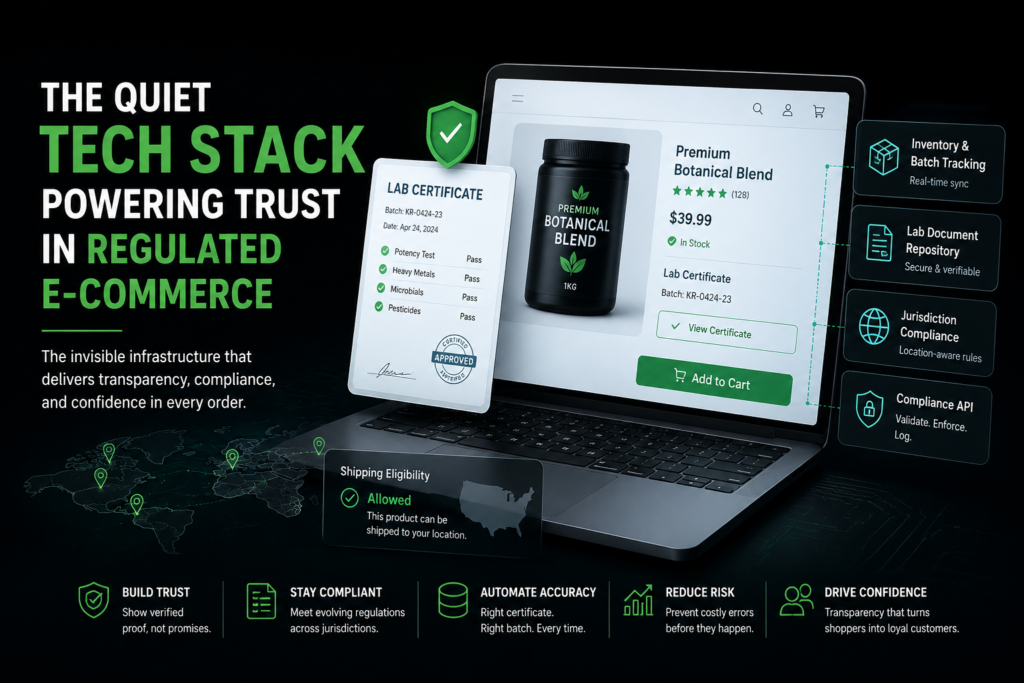
Most conversations about e-commerce technology focus on the flashy layer: recommendation engines, checkout optimization, personalization algorithms. There’s a quieter, less discussed technology stack running underneath a specific slice of online retail — the systems that regulated and semi-regulated product categories use to prove, in real time, that what they’re selling is what they claim it is. As consumer skepticism has risen and state-level compliance requirements have multiplied, this trust infrastructure has become one of the more technically interesting problems in e-commerce.
Why Product Pages Started Needing Their Own Backend
A standard e-commerce product page needs a title, images, a price, and a buy button. A product page for a regulated category needs considerably more: linked lab certificates, batch or lot tracking, sourcing documentation, and often jurisdiction-aware content that changes what’s displayed depending on where the visitor is browsing from. Building this well requires a genuinely different data architecture than a typical Shopify or WooCommerce storefront ships with out of the box.
The technical challenge isn’t trivial. A batch of product manufactured in a given month might get tested by a lab, receive a certificate, get packaged into individual SKUs, and then sit in inventory for weeks before it’s ordered by a customer. The product page needs to surface the correct, current certificate for whatever batch is actually shipping, not a generic or outdated one. Get this wrong and a company either shows stale data, which erodes the exact trust the system was built to create, or has to take pages down manually every time inventory turns over, which doesn’t scale past a handful of SKUs.
How Companies Are Solving the Batch-to-Page Problem
The more sophisticated solutions in this space tie lab result documents directly into inventory management systems, so that when a new batch enters stock, its associated certificate automatically becomes the one displayed to customers, and older certificates get archived rather than deleted, preserving an auditable history. This requires integration work between three systems that don’t always talk to each other well by default: the e-commerce platform, the inventory or warehouse management system, and whatever repository holds the actual lab documentation, often a simple cloud storage bucket with a naming convention disciplined enough to make automated lookups possible.
Some manufacturers in the botanical products category have built this kind of infrastructure internally rather than waiting for e-commerce platform vendors to offer it as a built-in feature, since the demand from this specific niche hasn’t been large enough yet for major platforms to prioritize it. Kingdom Kratom, a vertically integrated manufacturer and wholesaler, is one example of a company operating in this space that has invested in linking its testing documentation directly to its product catalog, an approach that reflects a broader industry pattern of regulated-category sellers building custom trust infrastructure rather than relying on generic storefront templates. It’s a useful case study for developers working in adjacent regulated verticals — supplements, CBD-adjacent products, specialty foods — who face structurally similar batch-documentation problems even though the specific compliance rules differ.
The API Layer Nobody Talks About
Behind the customer-facing product page sits an API layer that most shoppers never think about but that does most of the actual work: pulling the correct certificate reference, checking whether a given SKU is even permitted to ship to the visitor’s detected location, and logging that check for the company’s own compliance record-keeping. Building this well means treating compliance logic as a first-class part of the application architecture rather than a bolt-on script, which is a mindset shift for development teams used to treating e-commerce backends as relatively simple catalog-and-cart systems.
Teams that get this right often end up building what amounts to a lightweight internal compliance engine, sitting between the storefront and the checkout, that evaluates shipping eligibility and content display rules before a page even renders. It’s more engineering overhead than a typical online store needs, but for regulated categories operating across many jurisdictions simultaneously, it’s increasingly a non-negotiable part of the stack rather than a nice-to-have.
What This Means for Developers Entering the Space
For developers who haven’t worked in regulated e-commerce before, the learning curve is less about new programming skills and more about a different set of requirements to design against. Standard e-commerce architecture assumes a single set of rules applying to every visitor. Regulated e-commerce assumes the opposite: rules that vary by jurisdiction, documentation that has an expiration date, and a legal team that needs to review changes to product pages before they ship, not after. Developers who internalize this early tend to build more maintainable systems than those who try to retrofit compliance logic onto an architecture that was never designed to hold it.
Testing These Systems Before They Fail Publicly
One under-discussed engineering practice in this niche is treating compliance display logic as something that needs its own dedicated test suite, separate from the usual e-commerce checkout and cart tests. A bug in a recommendation algorithm might cost a company a few conversions. A bug that displays an expired lab certificate, or fails to block a sale to a restricted jurisdiction, can trigger a real regulatory or legal problem, not just a bad customer experience. Teams that have been burned by this tend to build automated tests that specifically check certificate freshness against inventory records and simulate visits from various jurisdictions to confirm the correct restrictions actually apply, rather than trusting that the logic works simply because it did during initial development.
This kind of testing rigor is still uneven across the industry. Larger, better-resourced manufacturers tend to invest in it proactively, while smaller sellers often discover the gaps only after an actual compliance incident forces the issue. As tooling matures and more open-source patterns emerge for this specific problem space, expect the bar to rise industry-wide, similar to how payment security testing became standardized after enough companies learned the hard way why it mattered.
The Trust Stack Is Becoming Its Own Discipline
As more product categories face rising scrutiny, expect the trust and compliance infrastructure layer of e-commerce to keep growing as its own specialized discipline, distinct from general storefront development. The companies getting it right today, largely out of necessity rather than choice, are effectively building the playbook that other regulated categories will eventually need to adopt as consumer expectations around verifiable transparency continue to climb across the broader online retail landscape.