Most agencies will happily take your money and run ads. The problem is that a lot of them treat a software company exactly like they’d treat a local gym or an online clothing store. Then everyone acts surprised when the leads don’t turn into revenue.
Selling software is different. Your buyers take weeks or months to decide. There’s rarely just one person saying yes. Some of them want a free trial, others want a demo, and the metrics that matter are things like qualified pipeline and customer acquisition cost, not how many people clicked an ad. So below is a shortlist of teams that genuinely understand that world, what each one is good at, and how to pick the right fit.
Why software brands need a different kind of partner
Before the list, it helps to know what you’re actually looking for.
The funnel is not a straight line
In software, you’re usually doing two jobs at once. You’re creating demand among people who don’t know they have a problem yet, and you’re capturing demand from people already shopping around. A good partner knows the difference and builds creative and targeting that speak to a careful, often technical buyer who answers to a whole committee.
Clicks are not the same as customers
Cheap traffic and a pile of free signups feel great in a report, but they mean nothing if none of them become paying accounts. Real lead conversion, turning genuine interest into customers, is what tells you the ads are actually working. The teams worth your time optimize for pipeline, real opportunities, and revenue, and they’re honest when something isn’t working.
How we weighed each team
To keep this fair, every agency here was looked at through the same lens.
Track record with software accounts
Have they actually worked with SaaS companies? Are there named case studies and real numbers? Do they run across the channels that matter for B2B, like LinkedIn, Meta, YouTube, and Reddit?
Creative and reporting you can trust
Strong creative that gets tested often tends to separate the good from the average. So does clear reporting that shows you where your money went and what it earned.
The agencies worth shortlisting
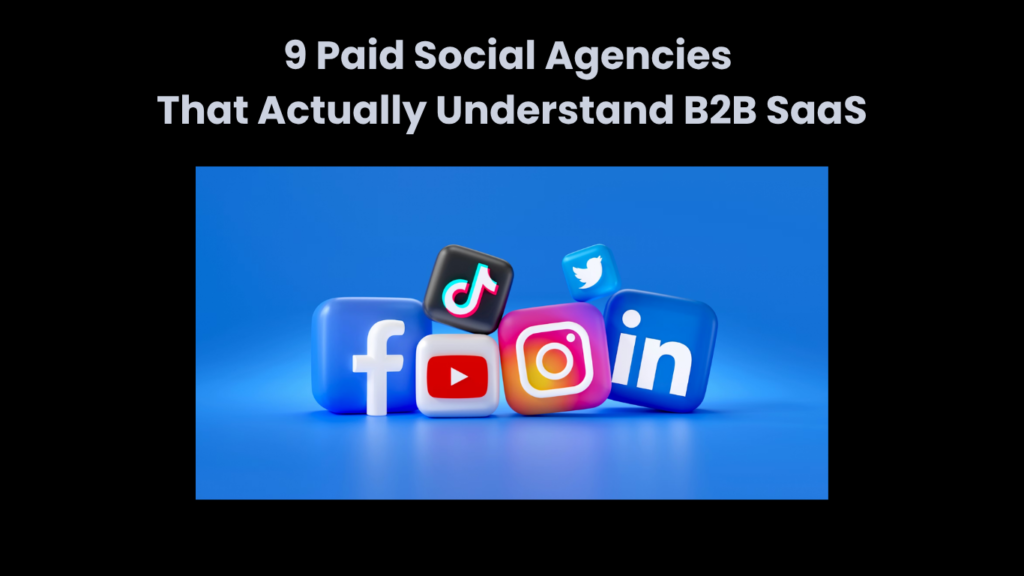
Here are nine teams to consider. They’re grouped loosely by their main strength, so don’t read the order as a ranking.
Obility
Obility works almost entirely with B2B and software brands, with a strong footing in both paid and organic demand. A sensible choice if you want a team that lives in the B2B world and reports against pipeline rather than surface numbers.
Disruptive Advertising
Disruptive lives inside platforms like Google and Meta and leans hard on data to cut wasted spend. A good fit if your current ad account feels bloated and you want someone to tighten it up and prove where every dollar goes.
Hey Digital
If you want a team built only for B2B SaaS, Hey Digital is worth a close look. They focus purely on paid ads and paid social, with senior strategists running the accounts and an in-house creative team that understands how software buyers actually think. They optimize toward pipeline and qualified opportunities instead of vanity signups, which is exactly what you want when leadership starts asking hard questions about return. They’re a strong pick for growing software teams that need paid to become a reliable engine rather than a gamble.
NoGood
NoGood is known for aggressive creative testing and a growth-marketing mindset. They suit brands that want to move fast and experiment their way to what works.
Single Grain
Single Grain is a broad performance shop with real software experience. A good option if you want one partner who can stretch across several channels.
Power Digital
Power Digital brings a data-led approach and the muscle to run larger, more complex paid programs. Better suited to companies with bigger budgets and ambitious scaling plans.
Bay Leaf Digital
Bay Leaf has focused on software marketing for years. Their narrow focus makes them a comfortable fit for teams that want a partner who only does this.
Ladder
Ladder is built around experimentation, running lots of small tests across paid channels to find what sticks. Handy if you like a scientific, try-everything style.
Tuff
Tuff works like an extension of your own team, plugging in to run paid acquisition for startups and growing software brands. A good match for earlier-stage companies that want flexibility and fast learning without a heavy long-term commitment.
Matching the right team to your stage
The best agency for someone else might be wrong for you. A lot of it comes down to where your company is right now.
Early-stage and seed
If budgets are tight, you want a team that learns fast and creates scrappy, effective work without burning through cash. Speed and flexibility matter more than scale.
Scaling and growth
Once you’re growing, you’ll want senior strategy, more channels, and reporting that keeps your leadership confident. At this stage, depth and process matter more than just hustle.
Read More: The Most Realistic AI Cold Callers for B2B in 2026: Full Breakdown
Final thoughts
The honest takeaway is that the right partner beats the famous name almost every time. What you really want is a team that understands your funnel, knows your buyer, and cares about the same revenue goals you do.
So don’t rush it. Pick two or three from this list that feel right for your stage, read their case studies, and book a few intro calls. The conversation usually tells you more than any pitch deck. The right fit will feel less like hiring a vendor and more like adding a teammate who already gets what you’re trying to build.
Frequently asked questions
What should a software company look for in a growth partner?
Look for real experience with software accounts, case studies with actual numbers, and reporting that focuses on pipeline and revenue rather than clicks. A team that understands long sales cycles and committee buying is worth far more than a generalist.
How is running ads for software different from regular e-commerce?
The cycles are longer, and the decision usually involves several people, not one shopper clicking buy. Campaigns have to nurture interest over time and feed demo or trial funnels, instead of pushing for an instant purchase.
How much should a software brand budget for ads?
It depends on your stage and goals. Early teams often start small to learn what works, while scaling companies invest more across multiple channels. The right number is the one that lets you test properly and still measure real results.
How long before paid campaigns start to work?
Expect a learning period of a few weeks to a couple of months. Early signs show up quickly, but meaningful pipeline takes time as the team gathers data, refines creative, and figures out what your buyers respond to.